Hickory Avenue Doesn't Get New Restaurants. It Gets Old Ones Back.
August 27, 2026
August 27, 2026
What do you call a restaurant that closed in 2014, then reopened under the same name a few miles away, with the same sauce recipe and enough of the same energy that regulars swear it's the real thing? In River Ridge and Harahan, you call it Tuesday. This stretch of Jefferson Parish along the river has a habit of bringing back what it already loved instead of importing something new to replace it, and once you notice the pattern on Hickory Avenue, you start seeing it everywhere else too: at the park where the farmers market sets up, at the country club that took over a plantation house, even in the name of the park itself.
That is the thing worth understanding about this corner of the metro right now. It is not that River Ridge and Harahan are having a moment of change. It is that change here tends to look like return.
Crazy Johnnie's opened in Metairie's Fat City in 1987 as a bar with a steak night that got too popular to stay a side hustle. Founder Johnnie Schram ran it until it closed in 2014. It sat closed for a decade. Now the name is back with locations in Metairie on Veterans Memorial Boulevard and in Harahan at 2317 Hickory Avenue, serving the same filet poboy, the same crazy potatoes, and steaks under a name that had been dormant longer than some of its new regulars have been driving. One recent visitor summed it up simply: "the real Crazy Johnnie's."
That is not how most restaurant turnover works. Most of the time a space closes and something unrelated takes it over, a different cuisine, a different owner, no connective tissue to what came before. Hickory Avenue does something else. A few blocks from Crazy Johnnie's, Bienvenue on Hickory has been serving contemporary Creole food at 467 Hickory Avenue since 2018, and rather than being displaced by newer competition, it absorbed talent from the neighborhood's own restaurant family tree when chef Scot Craig of Katie's and Francesca took over the kitchen. The continuity is the point. Nobody tore down the old spot to build something unfamiliar. They handed the keys to someone who already understood what the neighborhood wanted.
The newest arrival fits the same mold in a different way. Sophie's, a seafood and Italian spot named after the owner's daughter, opened in the space that used to hold Très Bon Cajun Meats. Even the genuinely new restaurant in River Ridge chose to grow into a building with a prior identity rather than build from scratch somewhere else.
If you think this pattern started with restaurants, it didn't. Zeringue Park, the green space at Wilson and Hickory where the Sunday farmers market sets up, used to be called Moisant Park. It was named for aviation pioneer John Moisant, who died in a plane accident nearby around 1910 while preparing for a flying competition. The park carried his name for decades before it was renamed Zeringue Park shortly after World War II. The land didn't change. The purpose didn't change. Only the name did, once, a long time ago, and it stuck. The Colonial Country Club followed the same logic in 1908, setting up inside the old Soniat Plantation home instead of clearing the land for something built from scratch.
That history matters if you're trying to figure out where the farmers market actually is this week, because the listings do not agree with each other. One recent source places the market at Zeringue Park, 501 Oak Avenue, on Sundays from 9 a.m. to 1 p.m. Another lists it a few blocks away at Harahan Playground on 10th Street, same Sunday hours. An older listing puts it at City Hall on Jefferson Highway, open only the second and fourth Saturday of the month. If you've lived here a while, none of this is confusing, you've watched the market move around this same handful of blocks over the years the way everything else here does. If you're newer to the neighborhood, the practical answer is to check the market's own weekly posts before you drive over expecting a full Sunday setup, because the location and day have genuinely shifted more than once.
A few doors from Bienvenue, the VFW Hall at 1133 Hickory Avenue hosted the Greater New Orleans Bonsai Society's annual auction and plant sale on August 8, the sort of gathering that could have happened in a rented event space anywhere but instead happens where it always happens, in the same hall that's hosted this community's meetings and sales for years. Viewing ran from 4 p.m., the auction from 6 to 9, free and open to anyone who wanted to look at trees that had been trained into shape over decades. It's a small event, but it's a tell. The building didn't need to be new to hold something that mattered to people.
Later this fall, the same civic rhythm continues with the St. Rita Fall Fest, typically held in early November at the church and school on the same side of town. It's the kind of date that doesn't move much year to year, another fixture on a calendar that favors repetition over reinvention.
Behind all of this sits the one feature of River Ridge and Harahan that hasn't changed shape at all: the levee itself. The Mississippi River Trail, known locally as the Levee Path, runs paved and mostly flat atop the river levee for roughly 22 to 25 miles, connecting Audubon Park in New Orleans through Jefferson Parish to the Bonnet Carré Spillway in St. Charles Parish. The stretch that runs past River Ridge and Harahan is part of a larger effort to link a bike and walking route the entire length of the Mississippi River, all the way north to Minnesota. Most people using it on a Tuesday evening aren't thinking about that. They're walking a dog, or getting a run in before the heat sets in, using the levee the way people here use most things: as infrastructure that was already there, doing the job it was built for, long before anyone thought to make a fuss about it.
If you live here and want to actually use what's around you this month, the shape of a weekend looks something like this:
None of this requires a car ride to Metairie or a trip into the city. It requires knowing that this particular stretch of Jefferson Parish tends to hold onto its own history rather than replace it, and that the businesses, parks, and buildings around Hickory Avenue keep proving that point one reopening at a time.
If you're weighing what a neighborhood like this is actually worth, not just in dollars but in the day to day experience of living there, that pattern of continuity is worth factoring in. A place where the steakhouse that closed a decade ago can come back and the crowd remembers exactly what it tasted like is a place with real staying power. Burk Brokerage Real Estate has spent more than two decades working in neighborhoods like this one across the New Orleans metro, and we're always happy to talk through what a specific block or property is worth today. Reach out for a free home valuation whenever you're ready.
Stay up to date on the latest real estate trends.

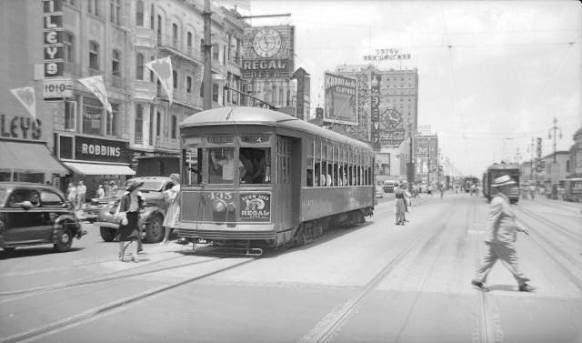
The oldest continuously operating street railway in the world does not run in Paris or London. It rattles down a live oak lined avenue in New Orleans, and it has been … Read more
We pride ourselves in providing personalized solutions that bring our clients closer to their dream properties and enhance their long-term wealth. Contact us today to discuss all your real estate needs!
BURK BROKERAGE REAL ESTATE
6260 VICKSBURG ST STE A NEW ORLEANS, LA 70124